
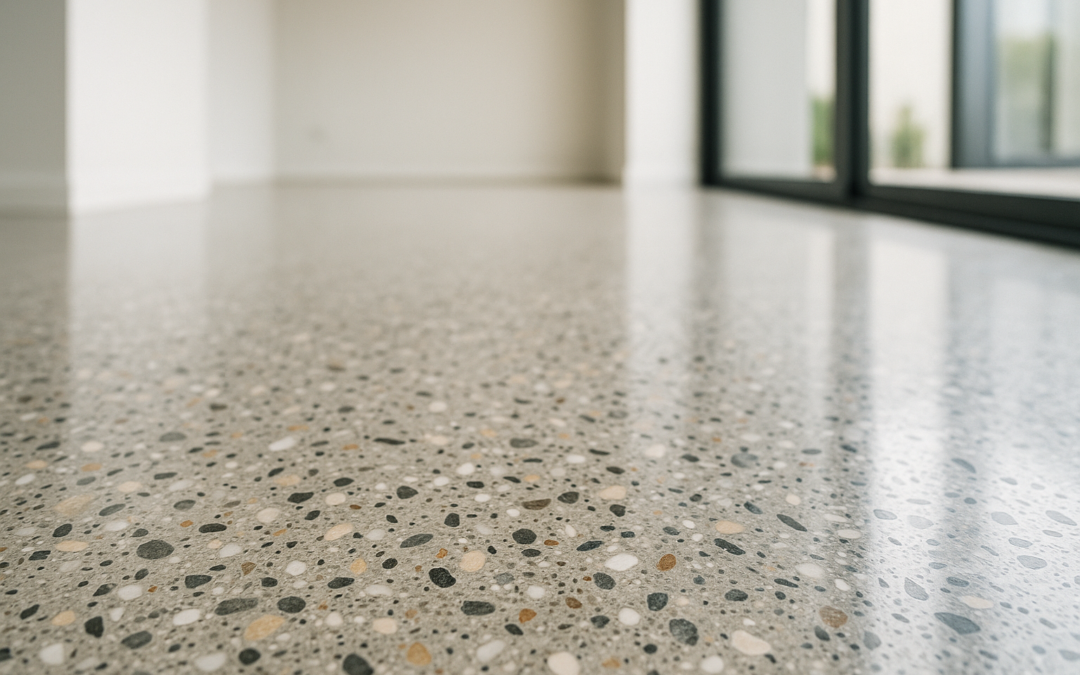
What are the disadvantages of terrazzo?
If you are a homeowner in Naples, FL thinking about terrazzo for your kitchen, entryway, or outdoor lanai, it helps to know what can go wrong. Terrazzo is beautiful and durable, but it is not perfect for every situation.
High upfront cost
Terrazzo installation is labor intensive. Materials and the skilled labor required mean the initial price is higher than many other flooring options. For single-room projects the cost can be hard to justify compared with tile or vinyl.
Installation time and complexity
A proper terrazzo floor needs careful preparation, multiple pours or topping layers, curing time, grinding, and polishing. That all takes time. Expect longer project schedules and more disruption than with prefab flooring. You will also need a contractor experienced with terrazzo techniques, not a general flooring installer.
Hard and cold underfoot
Terrazzo is a very hard surface. That makes it less forgiving on dropped dishes or tired feet. It also stays cool, so in cooler months you may want area rugs. On the upside, if you plan underfloor heating, terrazzo conducts heat well and works efficiently with radiant systems.
Slippery when wet
In Florida climates, where humidity and wet shoes are common, polished terrazzo can be slippery. Matte finishes and textured sealers help, but safety needs consideration around pools and front doors.
Cracking risk related to substrate
Terrazzo is rigid. Movement or settling of the underlying slab or framing can lead to cracks. Proper substrate prep and control joints reduce that risk, but older homes or structures with known movement may require additional engineering work.
Repairs and modifications are difficult
Small chips or stains can be repaired, but matching aggregate and finish is not always perfect. If you want to change the look later, removing or overlaying terrazzo is more invasive and costly than replacing tile or plank flooring.
Not ideal for sunny outdoor exposure
Epoxy terrazzo is commonly used indoors because it offers great color and shine. However epoxy can discolor or degrade in prolonged direct sun. Cement-based terrazzo fares better outdoors, but it requires different maintenance and sealing.
Sound and weight
Terrazzo reflects sound and can make rooms feel echoey. It is also heavy, which may require structural review for installations on upper floors.
If you are weighing pros and cons in Naples, FL, a local specialist can help you balance design goals and practical realities. Intra-State Terrazzo has worked on terrazzo and polished concrete projects across Southwest Florida since 1959 and can advise on whether terrazzo is the right fit for your home.
Want specific advice for your space? Visit intrastateterrazzo.com or call to discuss options and get a local estimate.